How to Visit a Pediatric Clinic in Korea With Your Child
Taking a sick child to a doctor is stressful in any country. It can feel even more difficult when the signs, forms, medical terms, and instructions are written in a language you do not fully understand.
I am a Korean father raising a three-year-old daughter in Korea. After taking my child to pediatric clinics for fevers, coughs, eye infections, mouth sores, and other childhood illnesses, I realized that the Korean medical system may feel unfamiliar to foreign parents.
This guide explains what usually happens when you visit a pediatric clinic in Korea, what to prepare, how prescriptions work, and what to do if your child needs emergency care.
Read the full Korean version at the bottom of this article.
1. Where Should You Take a Sick Child in Korea?
For common childhood symptoms, the usual first choice is a neighborhood pediatric clinic called
소아청소년과, which means “pediatrics and adolescent medicine.”
You can search for 소아청소년과 in a Korean map application. Check the clinic’s opening hours before leaving because some clinics close during lunch, stop accepting patients before the listed closing time, or operate differently on Saturdays.
- 소아청소년과 — Pediatric clinic
- 소아과 — Common shortened name for pediatrics
- 야간진료 — Evening or night consultation
- 일요일 진료 — Sunday consultation
- 응급실 — Emergency room
A neighborhood clinic is usually appropriate for fever, cough, runny nose, vomiting, diarrhea, rashes, eye discharge, ear pain, and other non-emergency symptoms.
Large university or tertiary hospitals may require a referral letter for normal outpatient care, especially when National Health Insurance benefits are used. For most routine symptoms, starting with a local clinic is simpler.
2. What Should You Bring?
Requirements can vary by clinic, but these items can make registration and consultation easier:
- The child’s passport, residence card, or identification information
- National Health Insurance information, if the child is enrolled
- A list or photo of medicines the child is currently taking
- Information about allergies and previous medical conditions
- The time symptoms started and the highest measured temperature
- The time and amount of any fever medicine already given
- A spare diaper, water, tissues, and a comfort toy for younger children
Before leaving home, write a short timeline on your phone. When a child is crying and the clinic is busy, it is surprisingly easy to forget when the fever started or when medicine was last given.
3. Registration at the Clinic
At the reception desk, say the child’s name and explain that it is your first visit if the clinic has not registered the child before.
| Korean | Pronunciation | Meaning |
|---|---|---|
| 처음 왔어요. | Cheoeum wasseoyo | This is our first visit. |
| 아이 진료를 받고 싶어요. | Ai jinryoreul batgo sipeoyo | I would like my child to see a doctor. |
| 영어 가능한 분이 있나요? | Yeongeo ganeunghan buni innayo? | Is anyone available who speaks English? |
| 건강보험이 있어요. | Geongang boheomi isseoyo | We have health insurance. |
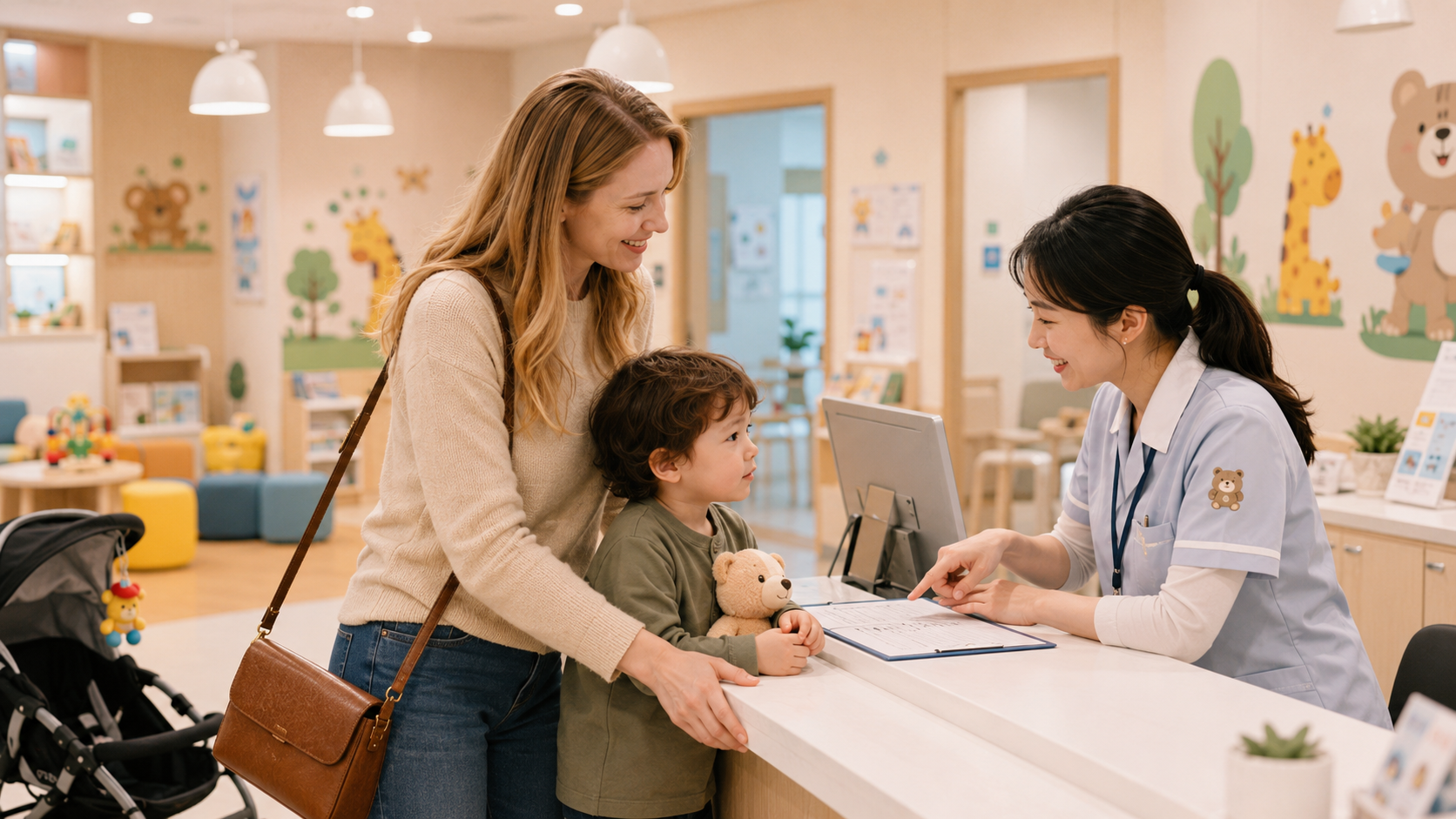
Some clinics call patients by name, while others display a registration number. Ask the receptionist how you will be called if you are unsure.
Many neighborhood clinics accept walk-in patients, but reservation systems and reception rules differ. A clinic may stop accepting new patients earlier than its official closing time when the waiting list is full.
4. How to Explain Your Child’s Symptoms
The doctor will usually want specific information rather than only “my child is sick.” Try to explain when the symptom started, how it changed, and how the child is eating, drinking, sleeping, and urinating.
| Korean | English meaning |
|---|---|
| 어젯밤부터 열이 났어요. | The fever started last night. |
| 최고 체온은 39도였어요. | The highest temperature was 39°C. |
| 해열제를 몇 시에 먹였어요. | I gave fever medicine at this time. |
| 물을 잘 마시지 않아요. | My child is not drinking well. |
| 이 약에 알레르기가 있어요. | My child is allergic to this medicine. |
Photos and videos can help when a symptom is intermittent. For example, you may show the doctor a photo of a rash, a video of unusual breathing or coughing, or a picture of vomit or stool if it helps explain the problem.
Do not be embarrassed about using a translation application. Prepare one or two short sentences before entering the examination room rather than trying to translate a long story while your child is crying.
5. What Happens After the Examination?
If medicine is needed, the clinic normally gives you a prescription called a
처방전. You then take the prescription to a pharmacy, called a
약국.
The pharmacy may be in the same building or nearby, but it is a separate business from the clinic. Give the prescription to the pharmacist and wait until the child’s medicine is prepared.

Common Words on Korean Medicine Instructions
| Korean | Meaning |
|---|---|
| 1일 3회 | Three times a day |
| 1회 5mL | 5 mL per dose |
| 식후 30분 | 30 minutes after a meal |
| 필요시 복용 | Take when needed, as directed |
| 냉장 보관 | Keep refrigerated |
| 복용 전 흔들어 주세요 | Shake before use |
Do not guess if the directions are unclear. Before leaving, ask the pharmacist to show you the amount using the supplied syringe, cup, or spoon.
Do not combine a Korean prescription with medicine brought from another country unless a doctor or pharmacist has checked the active ingredients. Different brand names may contain the same ingredient.
6. National Health Insurance and Medical Costs
Foreign residents and their dependents who are enrolled in Korea’s National Health Insurance generally receive the same scope of insurance benefits as Korean citizens.
However, registration status and eligibility can differ depending on residence status, employment, family registration, and the child’s individual enrollment. Being a foreign resident does not automatically confirm that every family member is currently insured.
Consultation costs vary depending on insurance status, clinic type, tests, injections, procedures, and prescribed medicine. Ask the clinic whether the child’s insurance eligibility has been confirmed if the bill seems different from what you expected.
The National Health Insurance Service provides consultation in English and several other languages. Current contact information is listed on the official NHIS English website.
7. What Should You Do at Night or in an Emergency?
For a non-life-threatening problem at night or on a weekend, search for
야간 소아과, 휴일 진료, or 응급실 and confirm by phone before traveling.
If your child has severe difficulty breathing, becomes unconscious, has a seizure, shows blue or gray lips, has a serious injury, or appears to need immediate emergency help, call 119.
Simple English for a 119 Call
- “We need an ambulance.”
- “My child cannot breathe well.”
- “My child is unconscious.”
- “My child is having a seizure.”
- “Our address is…”
- “Please connect an English interpreter.”
Your location is especially important. Give the exact address, apartment building and unit number, or a nearby landmark. Keep your phone available in case emergency staff call back.
8. A Simple Checklist Before You Leave Home
- Check whether the clinic is still accepting patients.
- Bring the child’s identification and insurance information.
- Write down symptom start times and the highest temperature.
- Record the name, amount, and time of medicine already given.
- Prepare allergy and medical-history information.
- Take photos or videos of symptoms that may disappear.
- Bring water, diapers, tissues, and a comfort item.
9. What I Have Learned as a Dad
When my daughter is sick, I want to explain every small change to the doctor. But the most useful information is usually simple: when the symptom started, how high the fever became, what medicine was given, and whether she is drinking and urinating normally.
A short written timeline works better than trying to remember everything in the examination room. Asking the pharmacist to repeat the dosage is also better than going home with uncertainty.
Korea’s clinic and pharmacy system may feel unfamiliar at first, but the process becomes easier once you know the basic sequence:
Pediatric clinic registration → Doctor’s examination → Payment and prescription → Pharmacy
Related KeepLiving Guides
-
Common Summer Illnesses in Children
— Korean-language guide -
Hand, Foot and Mouth Disease and Returning to Daycare
— Korean-language guide -
Childcare Support When Your Child Is Sick
— Korean-language guide
Official References
-
National Health Insurance Service — Guidance for Foreigners
-
National Health Insurance Service — Foreign-Language Contact Information
-
National Emergency Medical Center
-
Emergency Medical Services in Korea
This article provides general information about using medical services in Korea. It does not replace diagnosis, treatment, or instructions from a doctor or pharmacist. Clinic procedures, insurance eligibility, costs, and operating hours may vary.
한국어 번역|외국인 부모를 위한 한국 소아과 이용 가이드
아픈 아이를 데리고 병원에 가는 일은 어느 나라에서든 긴장됩니다. 안내문과 접수 서류, 의료용어, 복약 지시가 익숙하지 않은 언어로 적혀 있다면 부모가 느끼는 부담은 더 커질 수 있습니다.
저는 한국에서 세 살 딸을 키우는 아빠입니다. 아이의 발열, 기침, 눈병, 구내염과 여러 감염병 때문에 소아과를 다녀오면서 외국인 부모에게는 한국의 병원 이용 과정 자체가 낯설 수 있겠다고 생각했습니다.
이 글에서는 한국에서 아이가 아플 때 어디로 가야 하는지, 접수할 때 무엇을 준비하는지, 처방전과 약국은 어떻게 이용하는지, 응급상황에서는 어떻게 해야 하는지를 순서대로 설명합니다.
1. 아이가 아프면 어디로 가야 할까?
감기, 발열, 콧물, 기침, 구토, 설사, 발진처럼 일반적인 증상은 동네
소아청소년과를 먼저 이용하는 것이 보통입니다. 지도 앱에서 ‘소아청소년과’ 또는 ‘소아과’를 검색하면 주변 병원을 찾을 수 있습니다.
병원마다 점심시간과 접수 마감 시간이 다릅니다. 대기 환자가 많으면 표시된 진료 종료 시간보다 일찍 접수를 마치는 곳도 있으므로 출발 전 운영 여부를 확인하는 것이 안전합니다.
대학병원이나 상급종합병원은 일반 외래진료를 받을 때 진료의뢰서가 필요하거나 건강보험 적용 방식이 달라질 수 있습니다. 일상적인 증상이라면 가까운 동네 의원부터 방문하는 편이 간편합니다.
2. 병원에 가져가면 좋은 것
- 아이의 여권·외국인등록증 또는 신분 확인 정보
- 건강보험 가입 정보
- 현재 복용 중인 약의 이름이나 사진
- 약물 알레르기와 과거 병력
- 증상이 시작된 시간과 가장 높았던 체온
- 해열제를 먹인 시간과 용량
- 기저귀, 물, 휴지와 아이가 안정을 느끼는 장난감
병원에 가기 전 휴대전화 메모장에 증상의 시간 순서를 적어두면 좋습니다. 아이가 울고 병원이 혼잡한 상황에서는 열이 언제 시작됐고 약을 언제 먹였는지 순간적으로 기억나지 않을 수 있습니다.
3. 병원 접수 방법
처음 방문한 병원이라면 접수창구에서 아이 이름을 말하고 “처음 왔어요”라고 설명합니다. 병원에서 요청하면 아이의 신분증이나 건강보험 정보를 제시합니다.
병원에 따라 이름을 직접 부르기도 하고 접수번호를 화면에 표시하기도 합니다. 어떻게 호출하는지 모르겠다면 접수 직원에게 확인하면 됩니다.
4. 의사에게 증상을 설명하는 방법
단순히 “아이가 아파요”라고 설명하기보다 증상이 언제 시작됐는지, 어떻게 변했는지, 물과 음식을 먹는지, 잠은 자는지, 소변량이 줄었는지를 구체적으로 전달하는 것이 좋습니다.
- 어젯밤부터 열이 났어요.
- 가장 높은 체온은 39도였어요.
- 해열제는 오후 2시에 먹였어요.
- 물을 평소보다 잘 마시지 않아요.
- 이 약에 알레르기가 있어요.
발진이나 간헐적인 기침, 이상한 호흡처럼 병원에서는 나타나지 않을 수 있는 증상은 사진이나 영상으로 촬영해 보여주는 것도 도움이 됩니다.
5. 진료가 끝난 뒤 처방전과 약국 이용
약이 필요하면 병원에서 처방전을 발급합니다. 처방전을 가지고 병원 주변의 약국에 가서 제출하면 약사가 아이의 약을 조제합니다.
약 봉투에 자주 적히는 표현은 다음과 같습니다.
- 1일 3회: 하루 세 번
- 1회 5mL: 한 번에 5mL
- 식후 30분: 식사를 마친 뒤 30분 후
- 필요시 복용: 안내받은 증상이 있을 때 복용
- 냉장 보관: 냉장고에 보관
- 복용 전 흔들어 주세요: 먹이기 전에 약병을 흔들기
복용 방법이 명확하지 않다면 짐작해서 먹이지 말고 약사에게 다시 물어보세요. 주사기나 계량컵을 이용해 실제 1회 용량을 보여달라고 요청하는 것도 좋습니다.
해외에서 가져온 감기약이나 해열제를 함께 사용하려면 성분이 겹치지 않는지 의사나 약사에게 먼저 확인해야 합니다. 제품 이름이 달라도 같은 성분이 들어 있을 수 있습니다.
6. 외국인 건강보험과 병원비
한국 국민건강보험에 정상적으로 가입된 외국인과 피부양자는 원칙적으로 한국인과 같은 범위의 건강보험 혜택을 받을 수 있습니다.
다만 부모의 체류자격과 직장 가입 여부, 가족관계 등록, 아이의 개별 가입 상태에 따라 실제 자격은 달라질 수 있습니다. 외국인 가정이라는 이유만으로 모든 가족의 가입이 자동으로 확인되는 것은 아닙니다.
병원비는 보험 가입 여부, 병원 종류, 검사와 처치, 주사, 처방약에 따라 달라집니다. 예상보다 비용이 많이 나왔다면 아이의 보험 자격이 정상적으로 확인됐는지 접수창구에 문의해 보세요.
7. 야간·주말 또는 응급상황에는 어떻게 해야 할까?
생명이 위급하지 않은 야간·휴일 진료가 필요하다면 ‘야간 소아과’, ‘휴일 진료’, ‘일요일 소아과’ 등을 검색하고 전화로 운영 여부를 확인하는 것이 좋습니다.
아이가 심하게 숨쉬기 어려워하거나 의식을 잃고, 경련하거나 입술이 파랗게 변하고, 심각한 부상을 입는 등 즉각적인 응급조치가 필요한 상황이라면 119에 신고해야 합니다.
119에 연락할 때는 아이의 상태와 함께 현재 위치를 정확하게 말하는 것이 중요합니다. 도로명주소, 아파트 동·호수 또는 가까운 건물을 알려주고 구조대가 다시 전화할 수 있도록 휴대전화를 가까이 두세요.
8. 출발 전 확인 목록
- 병원이 현재 접수를 받고 있는지 확인하기
- 아이 신분정보와 건강보험 정보 챙기기
- 증상이 시작된 시간과 최고 체온 기록하기
- 이미 먹인 약의 이름·용량·시간 적기
- 알레르기와 과거 병력 정리하기
- 발진이나 특이 증상 사진·영상 준비하기
- 물, 기저귀, 휴지와 아이가 좋아하는 물건 챙기기
9. 아이를 키우는 아빠로서 배운 점
아이를 데리고 병원에 가면 사소한 변화까지 모두 설명하고 싶어집니다. 하지만 진료에 가장 도움이 되는 정보는 대체로 간단했습니다. 증상이 시작된 시간, 최고 체온, 복용한 약, 아이가 물을 마시고 소변을 보는지였습니다.
증상의 시간 순서를 미리 적어가는 것이 진료실에서 기억에 의존하는 것보다 편했습니다. 약국에서도 애매한 상태로 집에 돌아오기보다 복용량을 다시 물어보는 편이 훨씬 안전했습니다.
처음에는 낯설 수 있지만 한국의 일반적인 소아과 이용 과정은 다음처럼 이해하면 어렵지 않습니다.
병원 접수 → 의사 진료 → 진료비 수납과 처방전 발급 → 약국 방문
함께 읽으면 좋은 글
이 글은 한국 의료기관 이용에 관한 일반적인 정보를 제공합니다. 아이의 진단과 치료, 복약지시는 반드시 담당 의사와 약사의 안내를 따라야 합니다. 병원 운영 방식과 건강보험 자격, 진료비는 상황에 따라 달라질 수 있습니다.